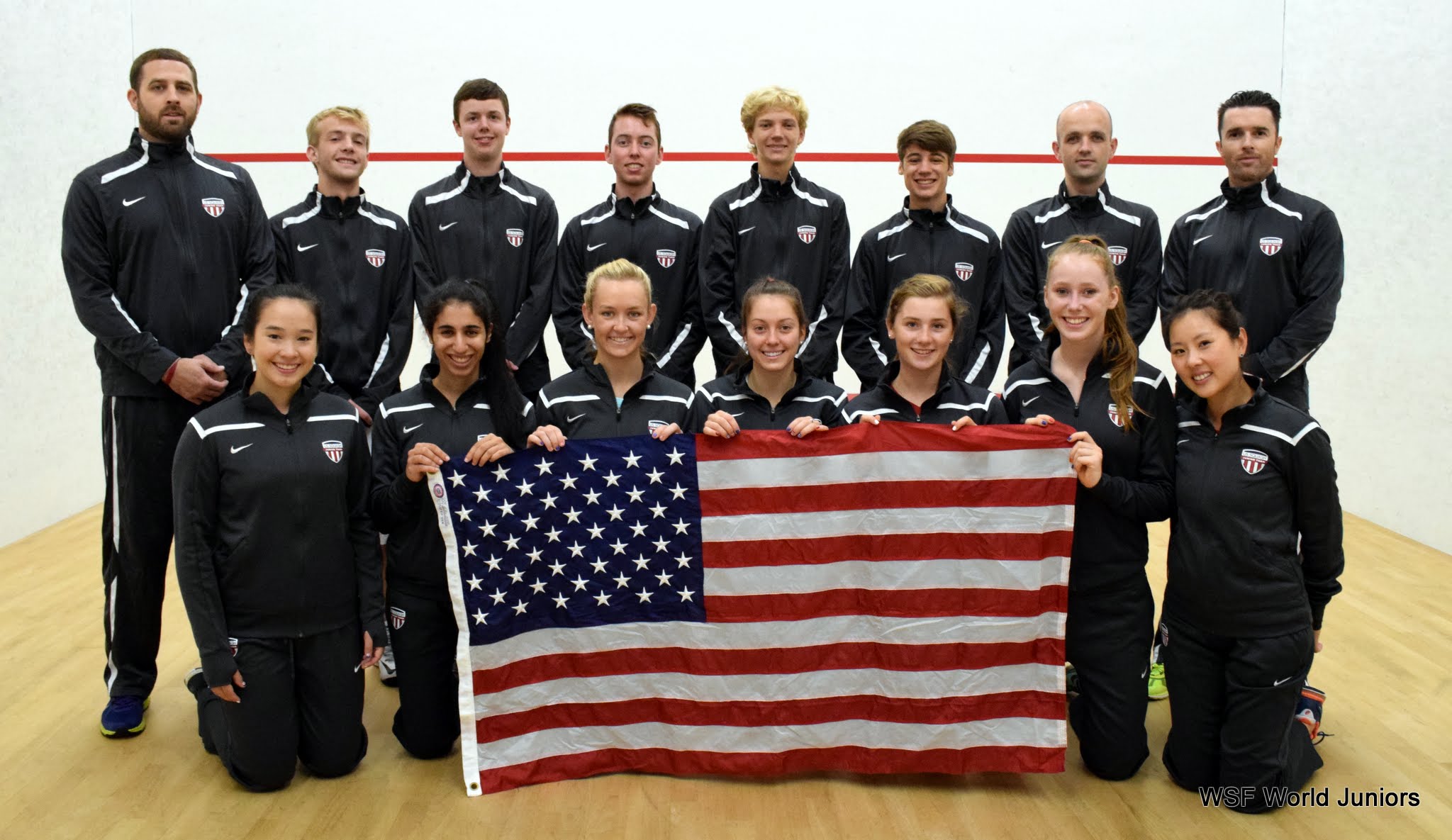
Following the successful completion of the World Junior Championships, the World Squash Federation (WSF) provided US Squash with the opportunity to provide feedback regarding improvements to the world championships structure.
US Squash welcomes this opportunity and provided input in four key areas—seeding process, location bid and vetting, event structure and on-site dispute process and transparency—based on experience from active participation in WSF Championship events and running both WSF and U.S. Championships.
US Squash has developed and implemented robust seeding processes for the U.S. Junior Open and the U.S. High School Championships, the largest individual junior tournament and overall junior tournament, respectively, in the world. The most applicable aspect to world championships is an iterative structure that provides for several rounds of feedback from players and coaches, resulting in accurate and transparent seedings despite the presence of players from around the world.
The World Championships are the pinnacle of squash, which makes the host selection extremely important. US Squash proposes the introduction of a streamlined bid process that focuses on several key areas: ease and cost of travel, quality of facilities, player experience both in the facility and in the broader location, and host experience in running world-level quality and scope events.
Player experience and safety is of paramount importance in any world championship, and hence several potential changes to tournament draws and formats should be explored. The introduction of qualifying rounds, reductions in the overall number of players, or splitting the tournaments into multiple divisions could shorten the length of the overall event, lessen player fatigue and reduce injury potential.
Effective and transparent management of inevitable problems such as seeding conflicts, player/coach conduct, officiating, tournament organization, etc. is essential in events with the importance of a world championship. To handle all issues transparently, strong conflict-of-interest policies must be in place, along with clear dispute management protocols that include broad regional representation in the tournament committees and explicit criteria outlining the framework for how these bodies come to decisions.
US Squash is excited to work with the WSF as part of an ongoing process to make all world championship events the best possible experience for players, the countries they represent and all fans of the game.